

Thursday, Oct. 15, 2026 | 2 a.m.
Editor's note: Este artículo está traducido al español.
Voter ID is back on Nevada’s ballot — and this time, the ballot is final.
Ballot Question 7 passed with 73% of the vote in 2024. If it wins a majority again this year, the Nevada Constitution will be amended to require voters to show a photo ID when voting in person and to provide the last four digits of a Nevada driver’s licence or Social Security number, or a voter registration number, when voting by mail.
Early voting begins Saturday.
The measure is led by the Repair the Vote PAC, which argues that a voter ID request will help prevent election fraud and enhance voter confidence. There is no evidence that fraud is a widespread problem at the state or national level.
The NAACP Las Vegas branch, the ACLU of Nevada and other organizations oppose the measure, arguing it solves a problem that doesn’t exist, creating a new one: the possible disenfranchisement of voters.
“Nevada already has fair, harmless and close elections. So the things that the proponents on the yes side want, we already have in this state,” said Quentin Savwoir, president of the NAACP Las Vegas branch.
If Question 7 passes, Nevada would become the 37th state with a voter ID law and the 25th to require photo ID at the polls.
Question 7 calls for voters to present a Nevada driver’s license, a government‑issued ID card, a U.S. passport, a U.S. military ID paper or other approved forms of photo ID.
The measure also allows some leniency: an expired ID will be accepted if it expired less than four years ago, or if the voter is over 70, a provision meant to prevent disenfranchising older adults who may no longer be able to drive.
Dave Gibbs, president of the Repair the Vote PAC, said the measure is modeled on voter ID laws in Georgia and Texas, some of which have held up to court challenges.
A Hearst probe identified 513 proven voter fraud cases nationwide since 2016, a tiny fraction (0.0000075%) of the more than 685 billion votes cast.
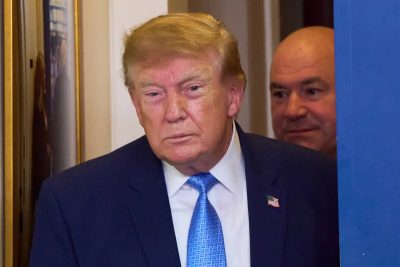
Even so, according to the Brennan Center for Justice, at least 12 states have tightened in‑person voter ID rules since the 2020 election, after which President Donald Trump promoted fraud claims following his loss to Joe Biden. Those claims were investigated in Nevada and other battleground states, and no evidence of widespread fraud was found.
Multiple lawsuits filed on behalf of the Trump campaign went nowhere.
“What it seems like is that we took a rumor that we heard across the state and ran with it,” Savwoir said.
Gibbs said “a lot of people have lost faith in the election process — for one reason or another.” Question 7 can help ease those concerns because “it’s further verification that (voters) are that person.”
“Voter ID in itself is simply a disenfranchisement tool,” countered Athar Haseebullah, enforcement manager of the ACLU of Nevada.
Haseebullah said requiring a photo ID at the polls would make it much harder for people to vote, including those who are unhoused, younger people who don’t have access to the DMV, people going through a gender transition, women who have a name change from marriage and people who can’t afford to pay for an ID.
A 2017 survey led by Kenneth Mayer, a University of Wisconsin‑Madison political scientist, found that Wisconsin’s voter ID law deterred thousands of people from voting in the 2016 election in the state’s two largest counties, Dane and Milwaukee.
Mayer’s survey of registered voters who skipped that election estimated that 11.2% of eligible nonvoters in the two counties were deterred by the law — about 16,801 people, and as many as 23,252 at the high end of the study’s estimated range.
“I think we make too many assumptions about Read the full story at Las Vegas Sun →
 Up nextWhite House confronts Democrats over planned probes, claiming they may be ‘blatant criminality’

 English (US)·