.png)
 3 hours ago
 1 hour ago
Rachel ClunBusiness reporter

 Getty Images
Lower gas and electricity bills were behind a bigger than expected drop in the UK's inflation rate, but inflation is widely expected to rise from here due to the ongoing impact of the Iran war.
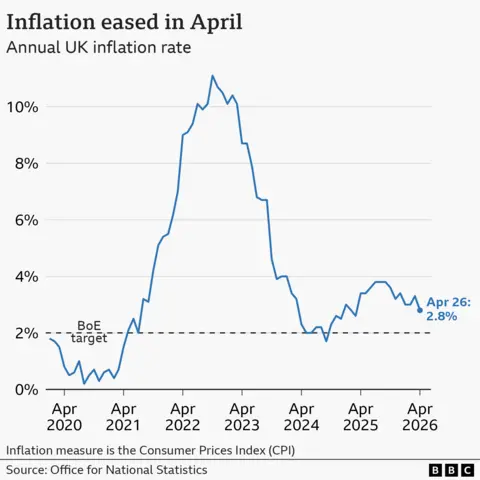
The rate of inflation, which measures price rises over time, fell to 2.8% in the year to April, down from 3.3% in the year to March.
Energy prices were lower due to the government's energy bill support package and lower wholesale energy prices before the conflict, the Office for National Statistics (ONS) said.
However analysts expect inflation to rise and reach about 4% by the end of the year, as the Middle East conflict continues to add pressure on global prices.
A lower rate of inflation does not mean prices are falling across the board, but that prices are rising more slowly than previously.
The drop in inflation occurred despite the rise in fuel prices due to the Iran war. The average price of petrol was 156.8p per litre last month, according to the ONS, the highest since November 2022. Diesel prices rose by more than 30p in April to take the average price to 190p per litre, the highest average since July 2022.
Yael Selfin, chief economist at KPMG, said the 2.8% rate of inflation was "likely as low as it gets for some time".
"We anticipate that inflation will trend higher through much of 2026, heading towards 4% by the end of the year."
Chancellor Rachel Reeves is set to reveal further cost of living support for households in anticipation of higher energy prices coming down the road due to the conflict in the Middle East.
On Wednesday, Reeves said said decisions taken in the Budget last year had "kept inflation down as we deal with global instability".
"We have already taken £117 off energy bills, frozen rail fares, and lifted the two-child limit, and over today and tomorrow I'll set out the next phase of how we will support UK households," she added.
Shadow Chancellor Mel Stride said: "Any fall in inflation is welcome, but prices are still rising far too fast and Labour have left our economy weak and exposed to the impacts of the Iran war."
Lindsay James, investment strategist at Quilter said the 7% fall in the energy price cap in April was a positive for consumers, but warned it would "short lived".
James noted the large increase in fuel prices underscored "potential threats that still lurk for consumers and businesses", and the UK should brace for higher inflation.
In a sign of what price rises could come down the line, ONS chief economist Grant Fitzner said the annual cost of "both raw materials and goods leaving factories continued to rise" last month due to higher oil and petrol prices.
Producer input prices - the cost of materials and fuel bought by producers to make goods with - rose by 7.7% in the year to April.
Fitzner said lower water and sewage bills and vehicle tax compared to last year also helped reduced overall inflation.
A slower rate of price increases for food - particularly chocolate and meat products - added to the downward pressure on inflation, he added.
Over the 12 months to April, inflation in food and alcohol drinks fell to 3%, down from 3.7% in the year to March.
Mixed signals for Bank of England
The Bank of England's job is to keep inflation at 2%. To do so, it can lift or lower interest rates in a bid to change how households and businesses use their money.
When inflation is above its target, it typically puts rates up. This can encourage people to spend less, which helps reduce demands for goods and services and limits price rises.
However, much of the current inflationary pressures in the economy have come from things outside the UK – higher oil prices due to the war in Iran has led to higher fuel prices – so higher interest rates could have a smaller effect on rising prices.
The Bank's rate setting committee also takes the general health of the economy into account, and data published on Tuesday showed the jobs market is continuing to weaken as the unemployment rate rose to 5%.
KPMG's Selfin said she did not expect the Bank to raise interest rates next month, saying its committee will "likely to wait for clearer evidence of a renewed pickup in domestic inflation".



 English (US) ·